The Quiet Revolution Driving Business Resilience
When we think about digital transformation, it’s easy to picture tech giants, cloud-native startups, or global consultancies disrupting industries with cutting-edge platforms. But beyond the headlines, a quieter — yet no less significant — technology revolution is underway in sectors not traditionally seen as technology-first.
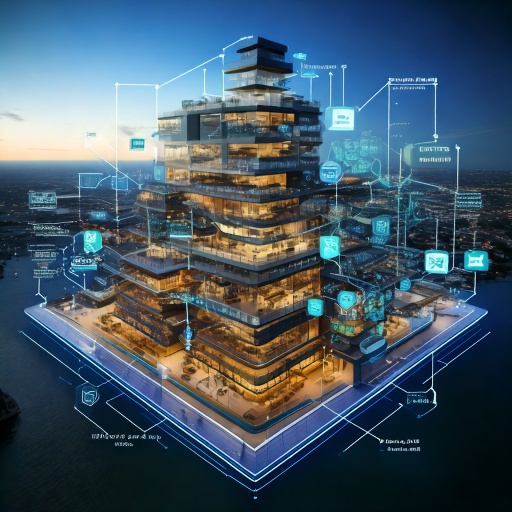
We’re talking about healthcare systems, insurance carriers, retail chains, manufacturers, and other brick-and-mortar enterprises. These are not product-based SaaS providers or digital-native firms — their core business models are rooted in service delivery, operations, logistics, and regulatory compliance, often with decades of legacy systems under their roofs.
Yet the pressure to modernize has never been greater.
📊 The Reality of Tech Modernization in Traditional Enterprises
Recent studies paint a clear picture:
- 71% of Fortune 1000 companies in non-tech industries report that legacy systems are a barrier to agility and innovation (NewVantage Partners, 2024).
- A 2023 McKinsey survey of large traditional enterprises found that over 60% are actively investing in cloud migration and data platform modernization.
- Only 27% of insurers and 32% of healthcare systems report having a “modernized, cloud-native technology stack” — but nearly 85% say it is a top priority over the next 3 years (Gartner, 2024).
- IDC forecasts that $350 billion will be spent globally on digital transformation initiatives in traditional enterprises in 2025 — more than half of that on core technology infrastructure updates.
🚀 Eight Core Themes of Technology Modernization
While each industry and company is unique, most traditional enterprises are converging on these common technology modernization themes:

1. Data Platform Modernization
Shifting from fragmented, siloed data systems to centralized cloud-based data lakes or federated data mesh architectures that support analytics, real-time insights, and AI readiness.
2. Cloud Migration & Hybrid Infrastructure
Moving core workloads and customer-facing applications to public and hybrid cloud environments to gain scalability, cost flexibility, and improved disaster recovery — while keeping sensitive data secure.
3. Application Modernization with Cloud-Native Architectures
Refactoring or replacing legacy monolithic applications with microservices, containerization, and modular frontends, enabling faster delivery, scalability, and easier maintenance.
4. AI Enablement Across Business Functions
Embedding AI into business processes such as fraud detection, supply chain optimization, personalized customer support, and predictive healthcare, leveraging modern data infrastructure and governance.
5. SaaS Ecosystem Consolidation and Rationalization
Reducing SaaS sprawl by standardizing platforms, renegotiating enterprise contracts, and eliminating duplicate tools to better control costs, data access, and security.
6. IoT and Edge Modernization
Integrating connected devices and edge computing into operations for real-time data collection and automation — from smart medical devices to retail inventory management and manufacturing telemetry.
7. Enterprise Observability and Resilience Engineering
Investing in real-time monitoring, distributed tracing, and service-level objectives (SLOs) to proactively manage system health, user experience, and operational risk.
8. Agile Ways of Working and Operating Model Shift
Adopting agile delivery models, cross-functional product teams, and DevOps mindsets to accelerate innovation, improve collaboration, and reduce organizational friction.
🧩 Supporting Enabler Themes
Alongside these core areas, enterprises are focusing on key enablers to ensure successful modernization:
- API Strategy and Integration Platforms that enable flexible, reusable connections between systems.
- Platform Engineering & Developer Enablement through self-service infrastructure and automation.
- Security & Identity Architecture, including zero trust frameworks and robust identity management.
- DevSecOps and Continuous Integration/Continuous Delivery (CI/CD) pipelines to speed safe releases.
- Change Management & Workforce Upskilling to help people adapt and thrive in the new technology landscape.
📌 Why This Matters for Millions of Businesses
According to Forbes’ Global 2000 list, there are over 5,500 companies worldwide with a market capitalization exceeding $1 billion. These companies span various industries, including healthcare, insurance, retail, and manufacturing, and are increasingly investing in technology modernization to stay competitive.
In the United States, the Fortune 1000 list ranks the 1,000 largest corporations by revenue, encompassing a significant portion of the nation’s economic activity. These enterprises are actively pursuing modernization efforts to enhance efficiency, agility, and customer experience.en.wikipedia.org
Even if they don’t sell software, their ability to survive increasingly depends on how well they leverage technology.
💡 Final Thought
Technology modernization is no longer just the domain of Silicon Valley. For traditional businesses, it has become a matter of resilience, competitiveness, and future readiness.
These efforts may not always be splashy, but they are reshaping the foundations of industries we all rely on — from the clinics that care for us to the stores we shop in and the insurers that protect our livelihoods.
Modernization is here. The only question is how quickly traditional businesses can make the shift — and who will be left behind.
 Tech Canvas